Advertisement:

Alternative content


Friday 18th of May 2012 - 02:40 PM
« Prev. Next »


Search Help
Published
Archive

Tip newspaper

Letter to the editor

Send image

10 practical tips when you've moved to Sweden


Lola Akinmade-Åkerström 2011-09-06


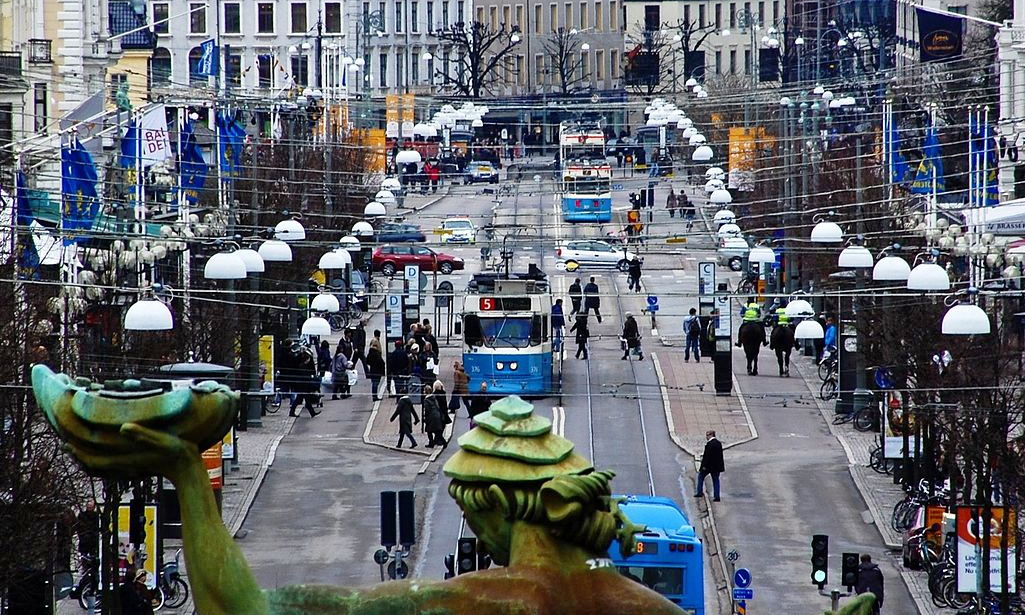
Image: Fredrik Broman/imagebank.sweden.se

Like any other country, Sweden comes with its own laws, tax regulations and social traditions. From getting registered with the right authorities to finding a job, here are 10 things to take care of once you've arrived in the Land of the Midnight Sun.

So, you've told your embassy that you've moved to Sweden. Now allyou have to do is...

1.Stay legal through Migrationsverket

It's safe to assume that you already secured the necessary resident permit required to legally reside and work in Sweden before arriving - either through a job, family, or for study purposes. Migrationsverket (www.migrationsverket.se) is Sweden's Migration Board and it handles issues relating to immigration, asylum, visas, permits, and citizenship.

All residence permits have expiration dates so you may want to locate your nearest Migrationsverket field or head office in case you need to renew permits or have other visa related issues. While citizens of some countries can start the process after arriving in Sweden, it is advisable to start the migration process at your local Swedish consulate or embassy before arrival.

2. Register with Skatteverket and obtain a "personnummer"

The most important requirement as a new resident is to get registered with the Swedish Tax Agency called Skatteverket. This registration process (folkbokföring) ensures you're added into the system for tax collection, personal identification, marital status monitoring, mailing address information, and insurance purposes.

By registering with Skatteverket, you will be assigned a unique personal identification number called personnummer (similar to a US social security number). Your legal identity in Sweden hinges on this key number and it is used for everyday official tasks such as opening up bank accounts, renting apartments, and getting paid by your employer.

You can learn more about getting registered with Skatteverket here.

3. Get insured

Once you've obtained your personnummer, your next step should be to register with the Swedish Social Insurance Agency (Försäkringskassan). Every resident is entitled to certain benefits such as basic healthcare, parental benefits, child allowances, disability coverage, and other insurance payments, so getting set up with Försäkringskassan will ensure that you are covered should unforeseen circumstances occur while you're still settling in.

4.Get a resident ID card

Once you've got your personnummer and you're registered with Försäkringskassan, obtaining a Swedish resident identification card (identitetskort) is a logical next step. A Swedish ID card is your primary form of identification around the country. It is used for opening bank accounts, using credit cards, picking up packages from the post office, and verifying your age before entering certain clubs or purchasing alcohol.

It is important to note that obtaining the Swedish ID card for the first time can be an inconvenient process because you need someone else who is already registered and has their own Swedish ID card to accompany you to Skatteverket in person to verify your identity. For those relocating to Sweden without family, this means taking your work boss, a colleague, or a friend with you.

5.Open a bank account
While credit cards and cash are accepted at most businesses and stores, setting up your own bank account here in Sweden is recommended. Most bills and salaries are automatically paid online, and Sweden has an extensive network when it comes to internet banking. There are four main banks in the country (in addition to some smaller banks), and they are Swedbank, SEB, Nordea, and Handelsbanken. Whichever bank you choose will help you obtain the necessary credit/debit cards and banking services you need.

6.Find a job or start your own company
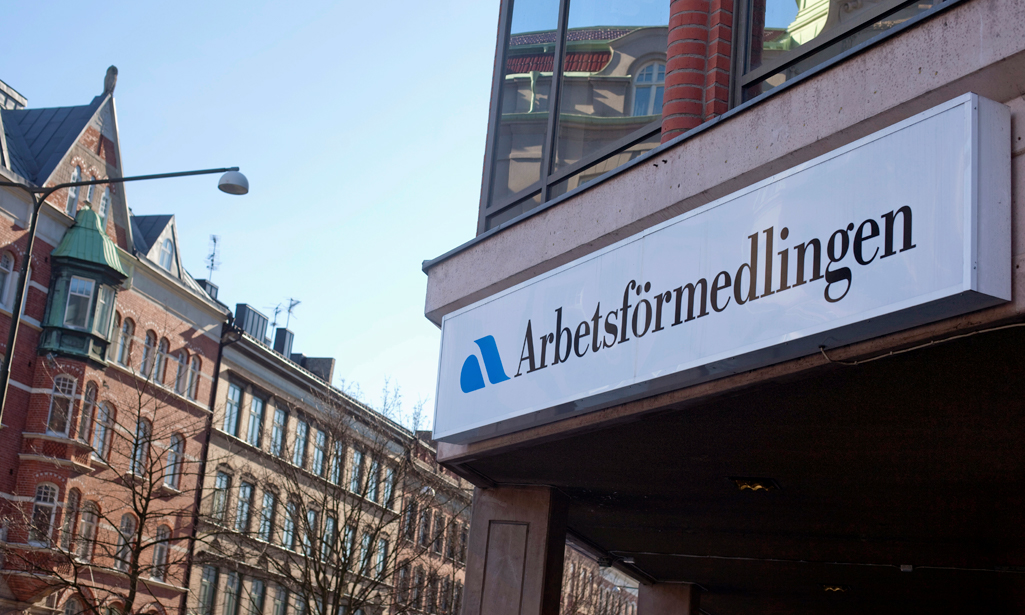
If your resident permit (stamped in your passport) also allows you to work in Sweden, then you should consider registering with the Swedish Public Employment Agency called Arbetsförmedlingen. The agency can help you find jobs that match your existing skill sets, education level, and work experience, and can also provide a free job coach to help guide you through the application and interview process.

If you're interested in starting your own company (eget företag), you will need to register your company name through the Swedish Companies Registration Agency (Bolagsverket) and obtain an F-skatt status through Skatteverket for tax purposes. Bolagsverket provides a step-by-step guide to help navigate setting up your own company.
Verksamt.se is another useful website if you want to start a business in Sweden.

7.Find an apartment

You possibly arranged temporary lodging or rented a room before arriving in Sweden and may want to move as temporary arrangements come to an end. Looking for your own place to stay can be a challenging task in larger cities such as Stockholm, Gothenburg, and Malmö, where available housing remains relatively scarce.

You can rent 'first-hand' or'second-hand' in Sweden. First-hand (förstahand) means you sign an agreement with the owner of the building, while second-hand (andrahand) means you sign an agreement with someone who owns the apartment or has the first-hand contract on the apartment.

To get a first-hand contract, you need to register to be put on the municipal waiting list (bostadskö) and it can take anywhere from a few days in some municipalities to up to 10 years for central locations in cities like Stockholm for a first-hand contract to become available.

As a new resident, you'll probably be renting an apartment from someone who owns the lease to the apartment in a second-hand arrangement. It is extremely important to make sure that the tenant cooperation board of the building has signed off on second-hand leasing.

You can use the websites below to find apartments in various cities around the country:
Bostad Direkt
AndraHand.se
Blocket
Related links:
Sweden.se - Rental accomodation
SKL - Swedish municipalities (contact details)
Hyresgästföreningen -Swedish Union of Tenants

8.Learn Swedish

Learning Swedish will not only make your integration into society a lot quicker, but can also open doors to other insider aspects of the culture that speaking Swedish affords you.
While many employers pay for Swedish classes for their foreign employees, there are also state-subsidized courses that can be taken for free or at minimal costs (usually for teaching materials). The most notable program is calledSFI - Swedish for Immigrants (Svenska för Invandrare).

SFI courses are offered through each local municipality's adult continuing education program (kommunal vuxenutbildning,orkomvux) so you will need to contact your local municipality (SKL). There are four SFI levels - A,B, C, and D - and each course usually spans 1.5-3 hours per day several days a week for a period of 3-4 months - so it is a major time commitment, especially if you are employed full-time.
 
Related links:
National Centre for Swedish as a Second Language (Stockholm University)
Swedish Institute - Learning Swedish
Sweden.se - Learning Swedish

9.Pay taxes in Sweden

Sweden has a complex and relatively high rate tax system, and the Swedish Tax Agency (Skatteverket) is responsible for collecting taxes. As much as 45 percent can be deducted from your income and revenue depending on various classifications- from direct and indirect taxes, taxes for goods and services (VAT, and excise duties), taxes earned on interest and profits, other forms of income tax and much more.

The tax system is a lot more straightforward if you're employed by a company, withtaxesautomatically deducted from your salary every month. However, if you are self-employed, the tax structure is a lot more complicated.

Your best bet would be to find a good tax accountant to guide you through the process of identifying which taxes you're responsible for, ensuring your taxes are paid, and making sure your annual tax declarations (tax returns) are filed properly.

Related links:

Sweden.se - Taxation
Association of Swedish Accounting consultants
Taxes in Sweden 2010.A summary of the Tax Statistical Yearbook of Sweden

10.Get a driver's license

Sweden has a reliable transportation network of trains, buses, trams, ferries, and airlines, so you can live in Sweden without the need to get a driver's license (körkort). However, if your job requires one or if you'd like the freedom of occasionally renting a car, you may be able to drive on your foreign driver's license for up to one year.

After one year as a resident and if you plan on purchasing your own vehicle in the future, you are required to obtain a Swedish driver's license.

The process of getting a Swedish license requires submitting an application (körkortstillstånd), paying all necessary fees, studying for and passing a series of theoretical and practical exams including an ice-driving/slippery surface driving test (halkbana), and finally scheduling your driving test through the Swedish Transport Administration (Trafikverket).

Note that EU and EEA driving licensesare valid in Sweden and you do not need to trade them for a Swedish license.

Switzerland and Japan are special cases as licenses from these countries can be exchanged for a Swedish one without taking a driving test - but you must do so within a year of being registered in Sweden. In addition, you must meet the personal and medical requirements that apply for drivers' licenses in Sweden - this includes an eye examination certificate, health declaration, and for some categories of license, a doctor's certificate.

Check with the transport administration below to see what rules and regulations apply to your existing driver's license such as how long you can drive on it before getting a Swedish license and which exams you're required to take or exempted from.

Related links:

Trafikverket (Swedish Transport Administration)
Körkortsportalen (information aboutformal demands for different driving licenses)
Transportstyrelsen (Swedish Transport Agency)

This text was first published on Sweden.se - Sweden's official website.

Post comment     Tip a friend     Print


History of Sweden: War, peace and progress


Fourteen thousand years ago, present-day Sweden was covered by a thick ice cap. As the ice... More

Internet freedom in Sweden — a closer look


Sweden promotes internet freedom globally. But what about internet freedom within Sweden? Just how...

More

Give your Swedish skills a summer boost


People of all ages and from all over the world - from France and Britain to China and Japan... More

A Swedish Easter - GLAD PÅSK!


It's a celebration with Christian origins and Easter eggs (both painted and of the chocolate... More


Thousands celebrate Nowruz at Götaplatsen


Music and smoke filled the air as over 10,000 people celebrated the Persian New Year at Gö... More

Expat calendar 2012

Swedish Valborg celebrations in Slottsskogen 2011

As nice as it is to take part in Swedish traditions and celebrations, when living abroad it can...

More

The Swedish myths: True, false or somewhere in between?


More

10 tips for starting a business in Sweden


When it comes to starting a business in Sweden, a little planning goes a long way. Here are 10 tips...

More

20 things to know before moving to Sweden

A typical Swedish fika <br />

As diverse as Sweden is, there are a few societal norms that are distinctly Swedish. Understanding...

More

10 practical tips when you've moved to Sweden


Like any other country, Sweden comes with its own laws, tax regulations and social traditions. From... More

Scandinavian Bewilderment


PART IV. Aside from a few run-ins with intoxicated Swedish hockey fans, and the occasional mishap... More

Scandinavian Bewilderment


PART III. Blending into the fabric of an alien society may present its challenges in cultural shock... More

Scandinavian Bewilderment


Part II. Integration demands adaptation. However, bravely putting theory into practice with limited... More

Scandinavian Bewilderment


Part I. ‘Welcome to Sweden' the fair haired woman at the counter said, with a bored... More

Coping with culture shock

Moving to a new country is both exciting and daunting. In a series in Göteborg Daily, Dr.... More

Making a relationship work after relocation


Part 2 of Göteborg Daily's series: A new life abroad. In this article Dr. Julie provides... More

A new life abroad: Time to say goodbye


It may hurt in the short term, but saying goodbye is essential for long-term adjustment.

Whether you are thinking of moving to Sweden or have already made the transition, do not underestimate the...
More

"I feel trapped"

In this week's "a new life abroad", Dr. Julie answers a question from one of our readers. More

Take control of your situation


Further tips for couples: Several readers responded to the article, Making a relationship work... More


Main partners:


Social media:


Gothenburg photos:


Advertisements:

Alternative content


Most read